A Legacy of Craft
Born in the vibrant heart of Jaipur, Mishkaya represents a bridge between ancient Indian block printing heritage and modern international luxury.
About Mishkaya
Mishkaya is a premium Indian home decor and apparel brand based in Jaipur, Rajasthan. We specialize in hand-block printed textiles, working with local artisans to create intricately patterned collections. Our focus is on preserving traditional printing techniques while designing contemporary, high-quality pieces for modern homes and wardrobes.
Empowering Village Women
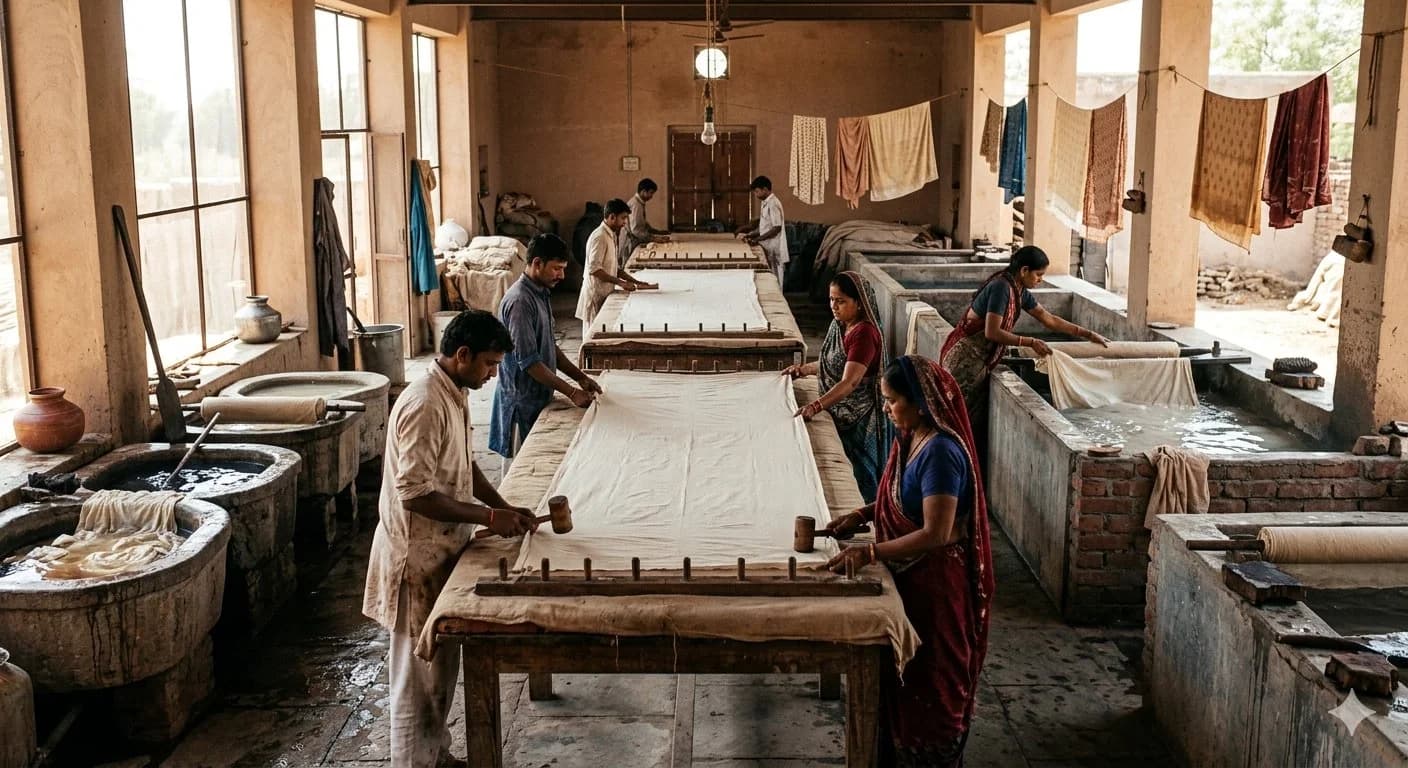
At the core of Mishkaya lies a deep commitment to the communities that have stewarded the art of block printing for over 500 years. We believe that true luxury is ethical, sustainable, and empowering.
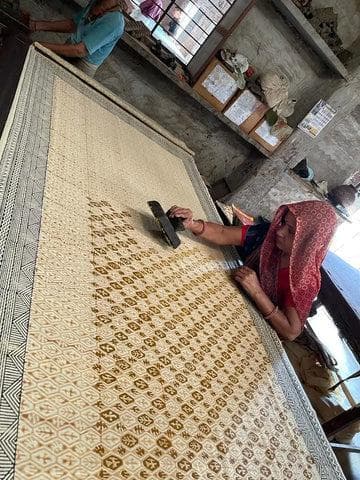
We partner directly with multi-generational artisan families across rural Rajasthan, eliminating middlemen to ensure fair, living wages. Crucially, Mishkaya is dedicated to women's empowerment. By providing stable employment, skill-building workshops, and leadership roles within our production chain, we help village women achieve financial independence, supporting both their families and the preservation of this magnificent heritage craft.
Meet Our Founder
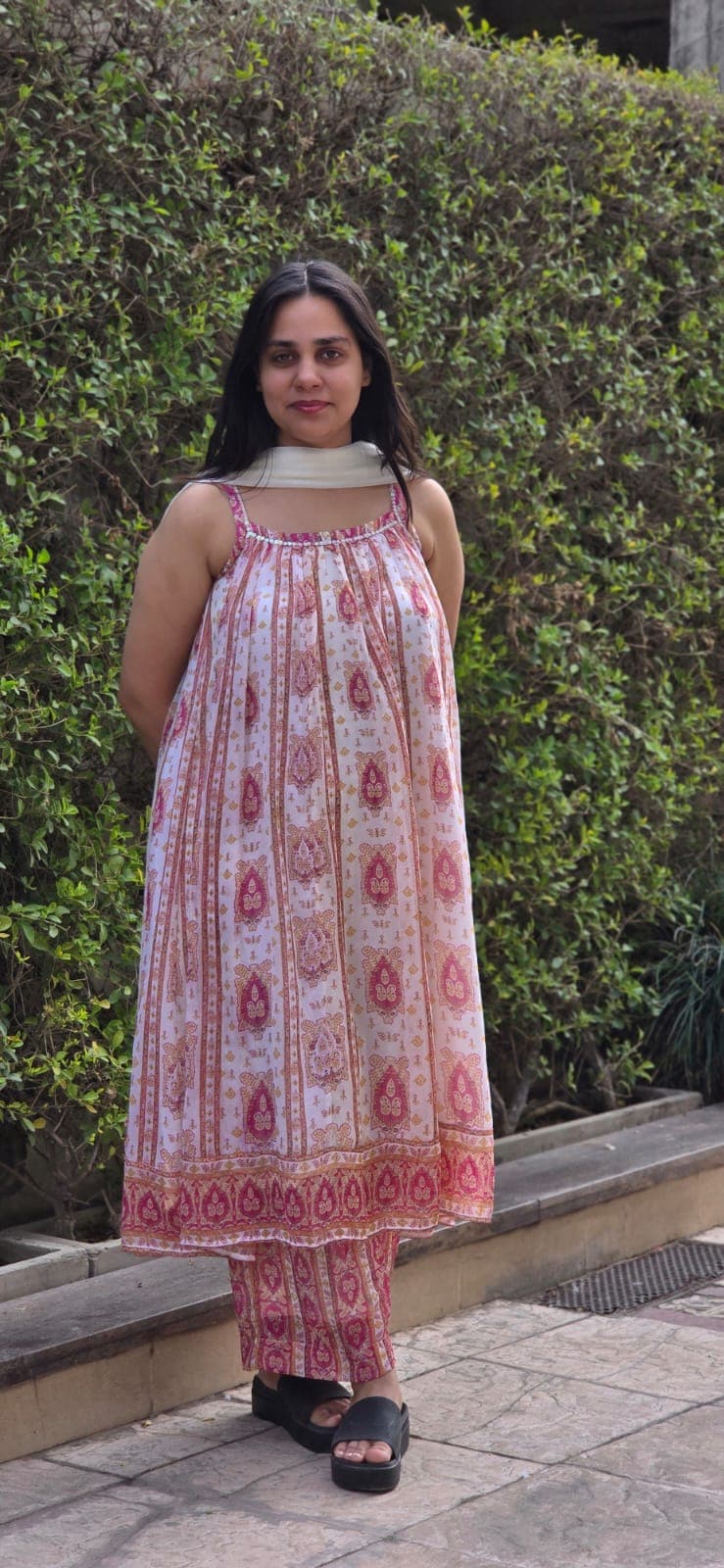
"My journey with textiles began in the vibrant lanes of Jaipur. I witnessed the sheer dedication of artisans whose hands were stained with indigo, keeping a 500-year-old craft alive. Mishkaya was born from a desire to share this heritage with the world while ensuring the artisans receive the recognition and fair wages they deserve."
— Anjali Sangwan
Founder & Creative Director, Mishkaya
See the Craft in Action
The Art of Block Printing
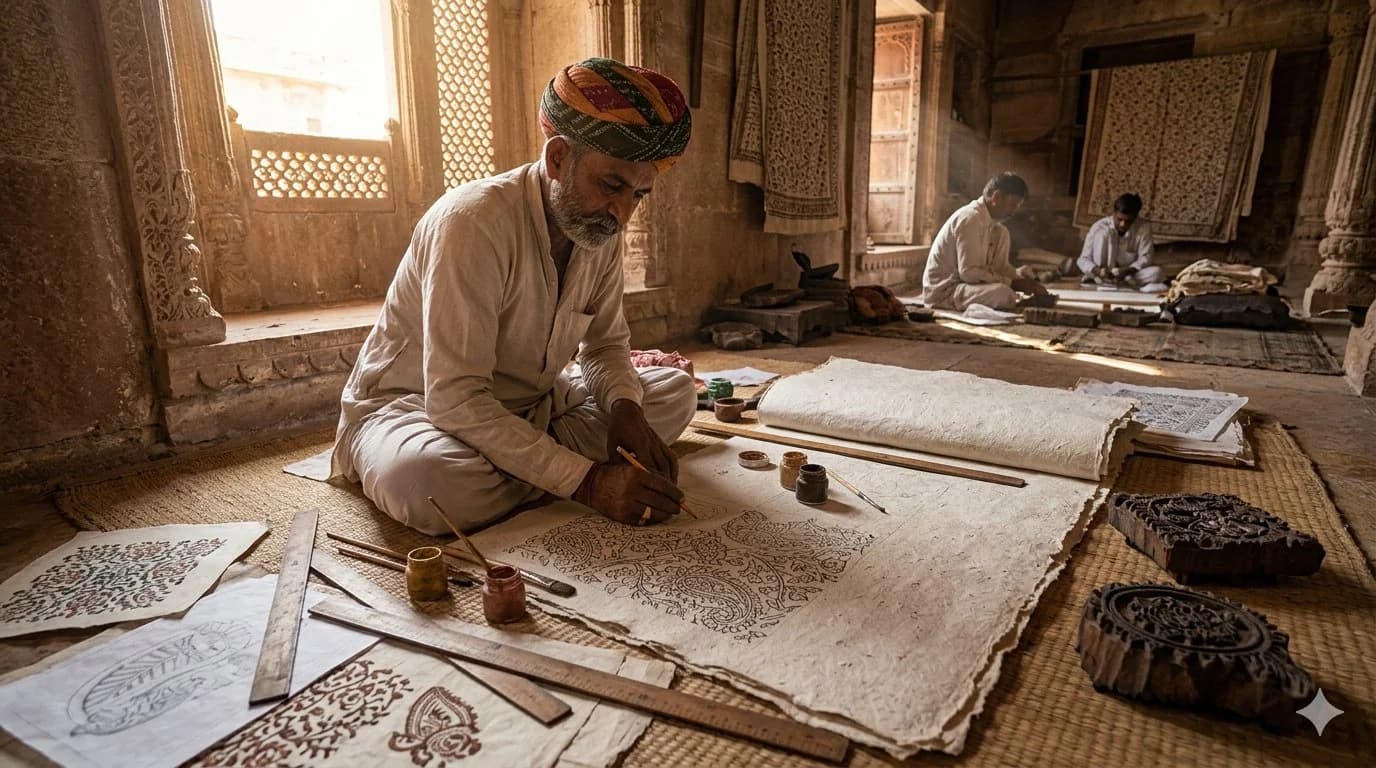
Design Creation
Artists create the pattern or motif to be printed. Separate designs may be prepared for each color in the final print.
Block Carving
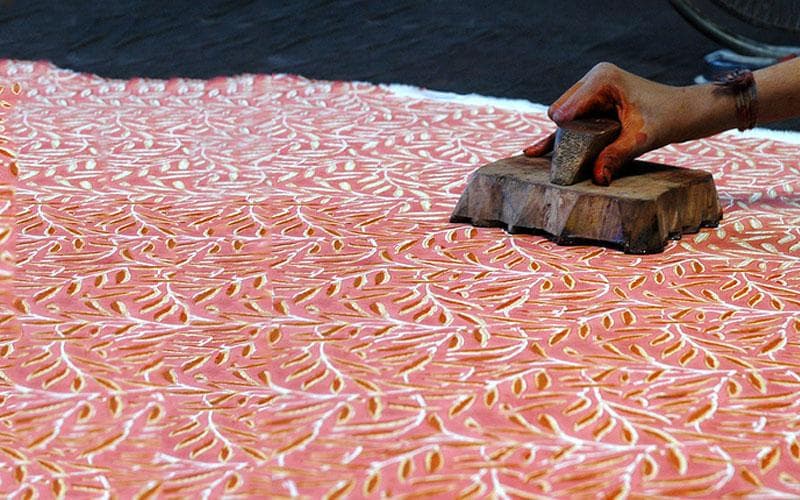
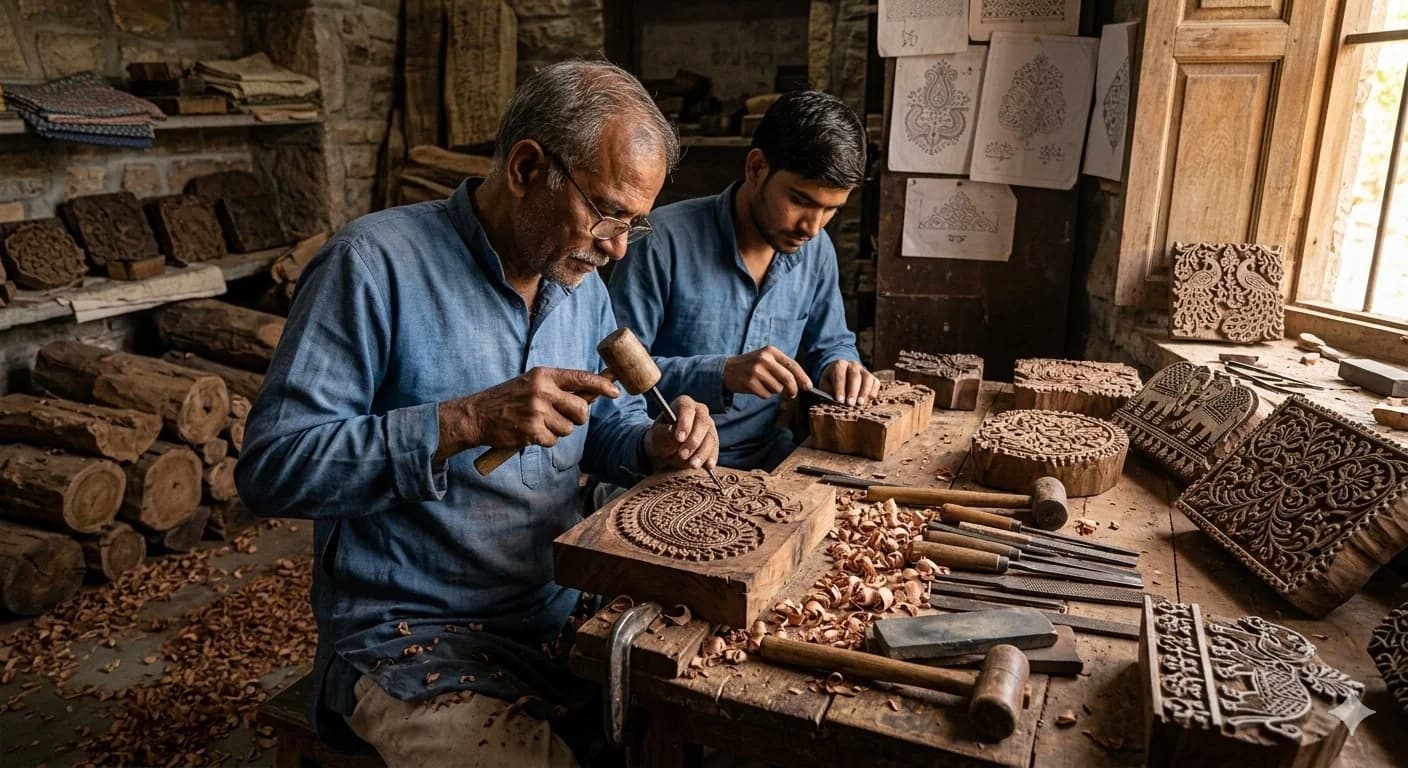
Skilled craftsmen carve the design onto teak or sheesham wood blocks. Each color requires a separate block with precise registration marks.
Fabric Preparation
The fabric is washed to remove impurities, treated or mordanted, and then stretched and fixed onto long printing tables.
Preparation of Colors
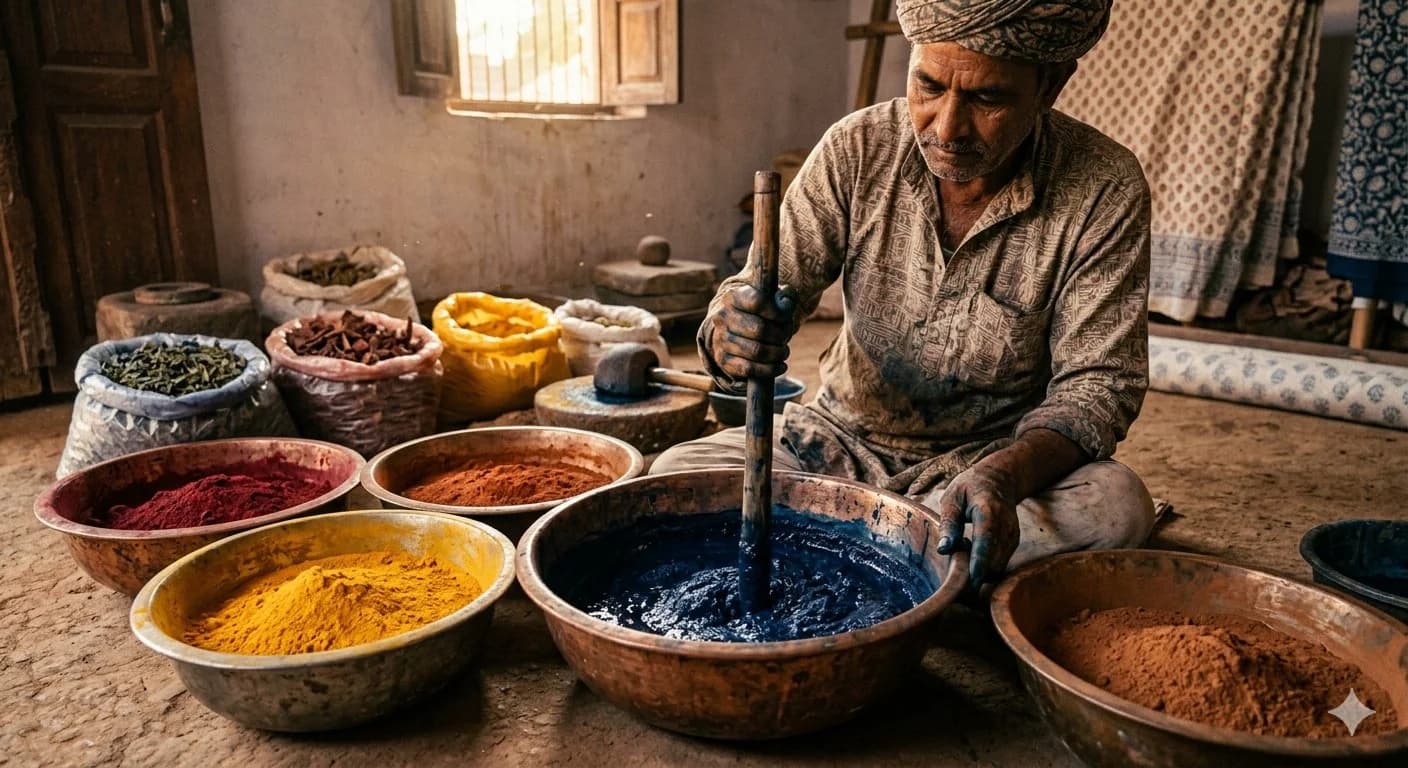
Natural dyes, pigments, or reactive colors are prepared and spread evenly on trays or printing pads.
Block Printing
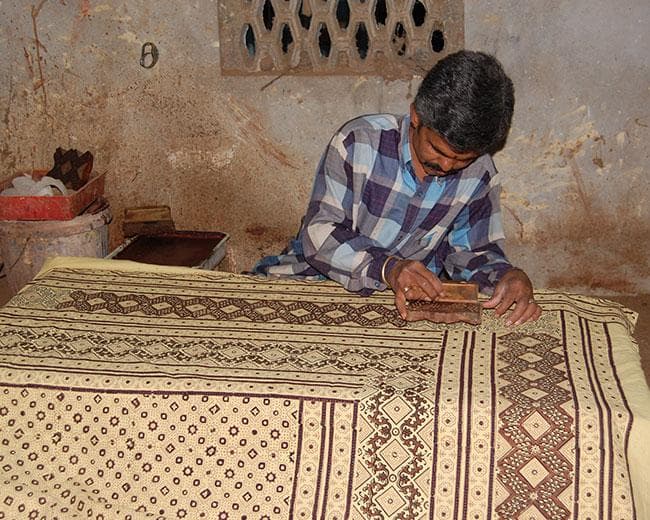
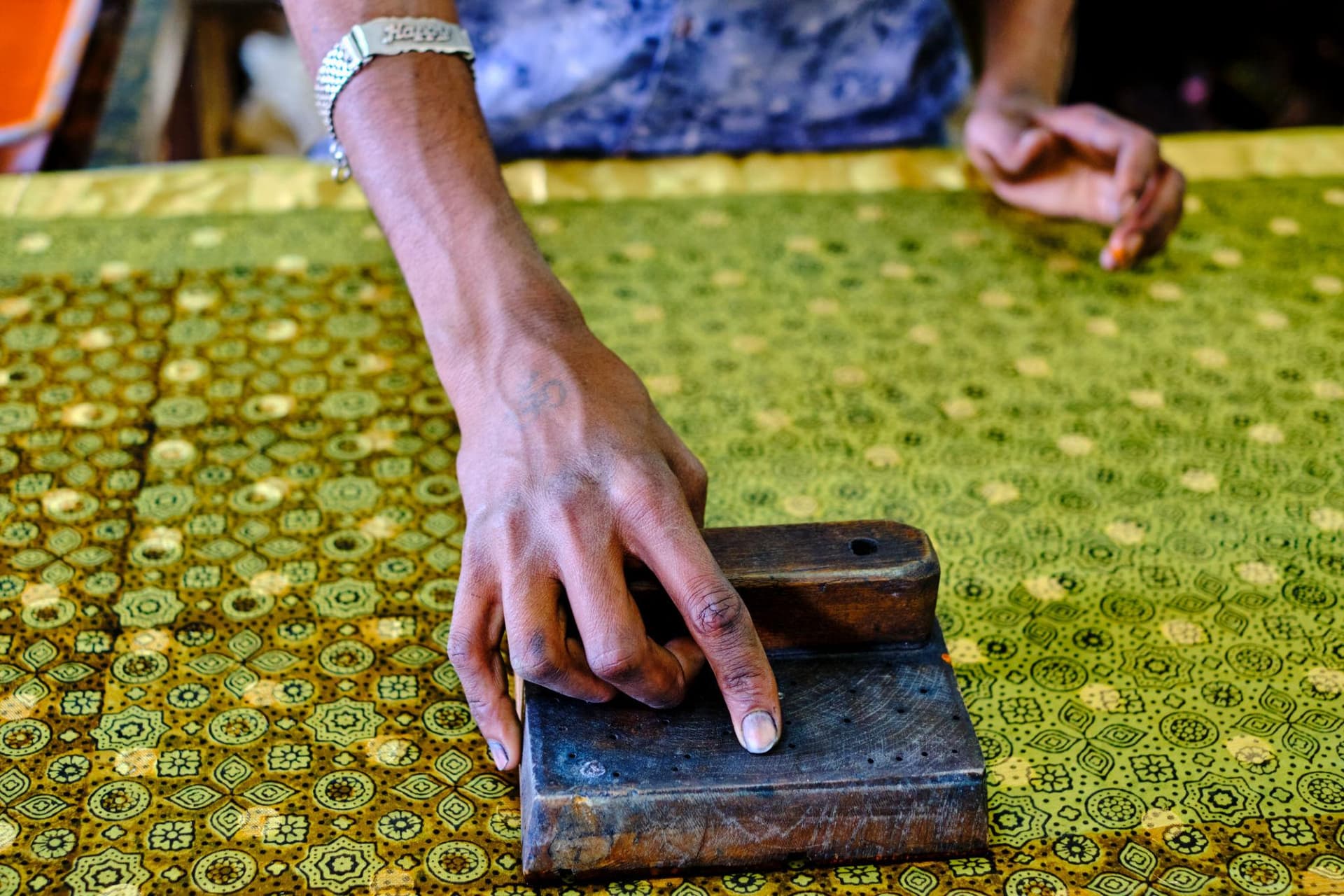
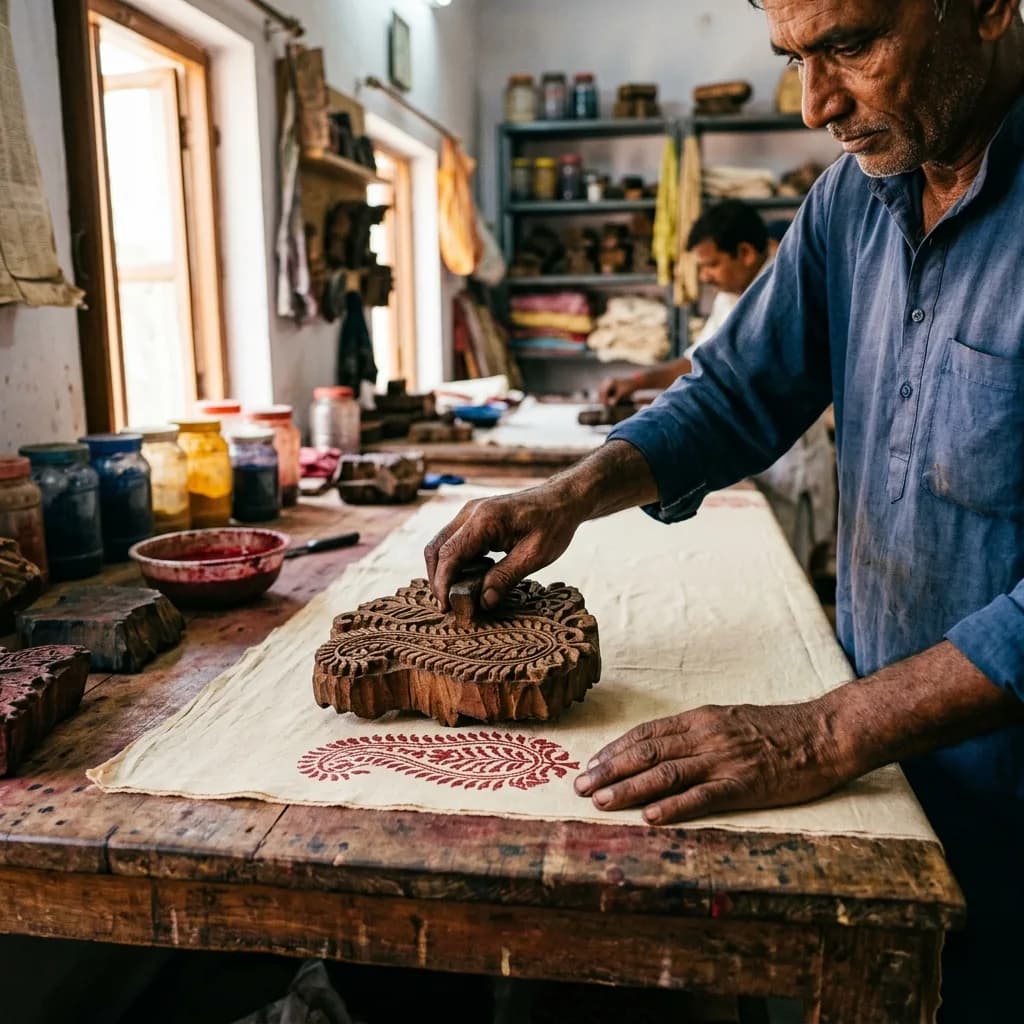
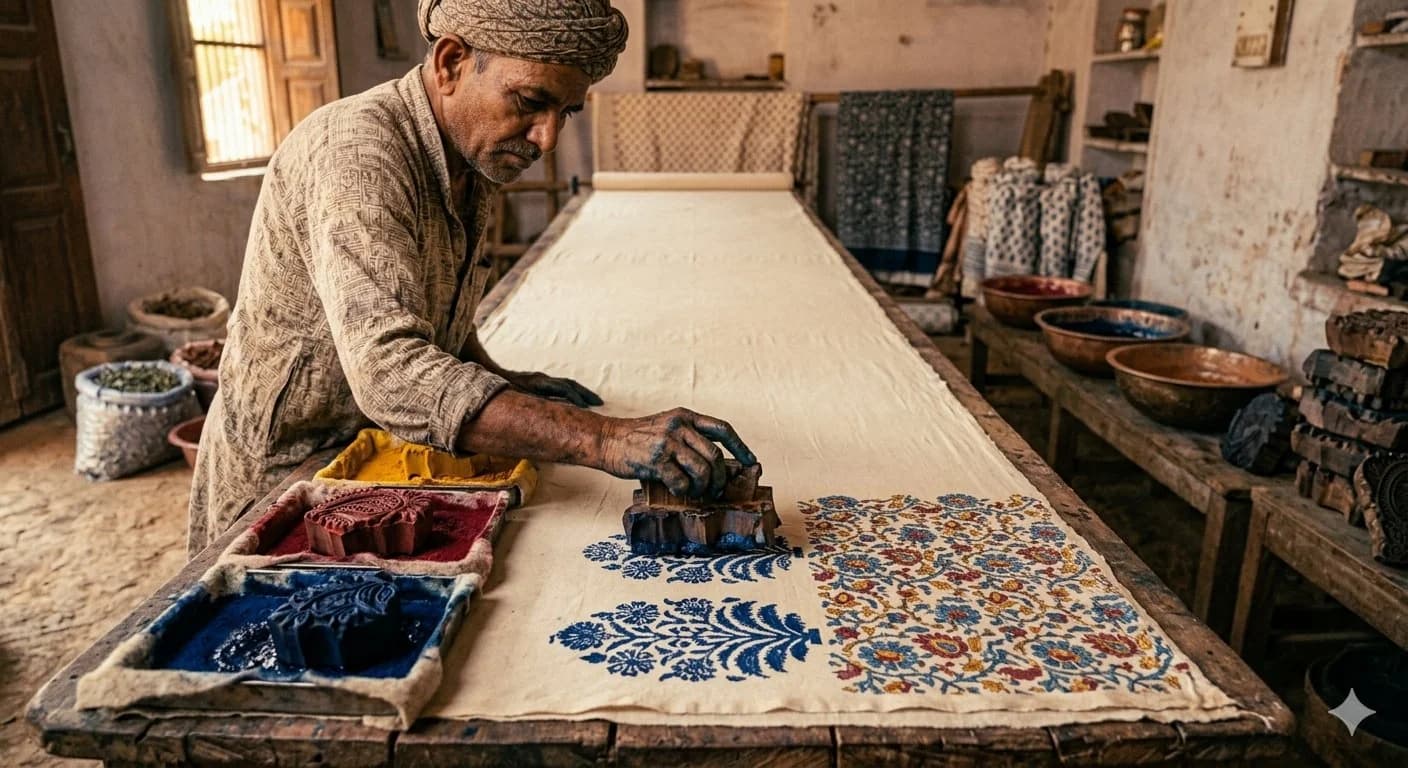
The printer dips the carved block onto the color pad and carefully presses it onto the fabric. The process is repeated systematically across the fabric length, using additional blocks for different colors and details.
Drying
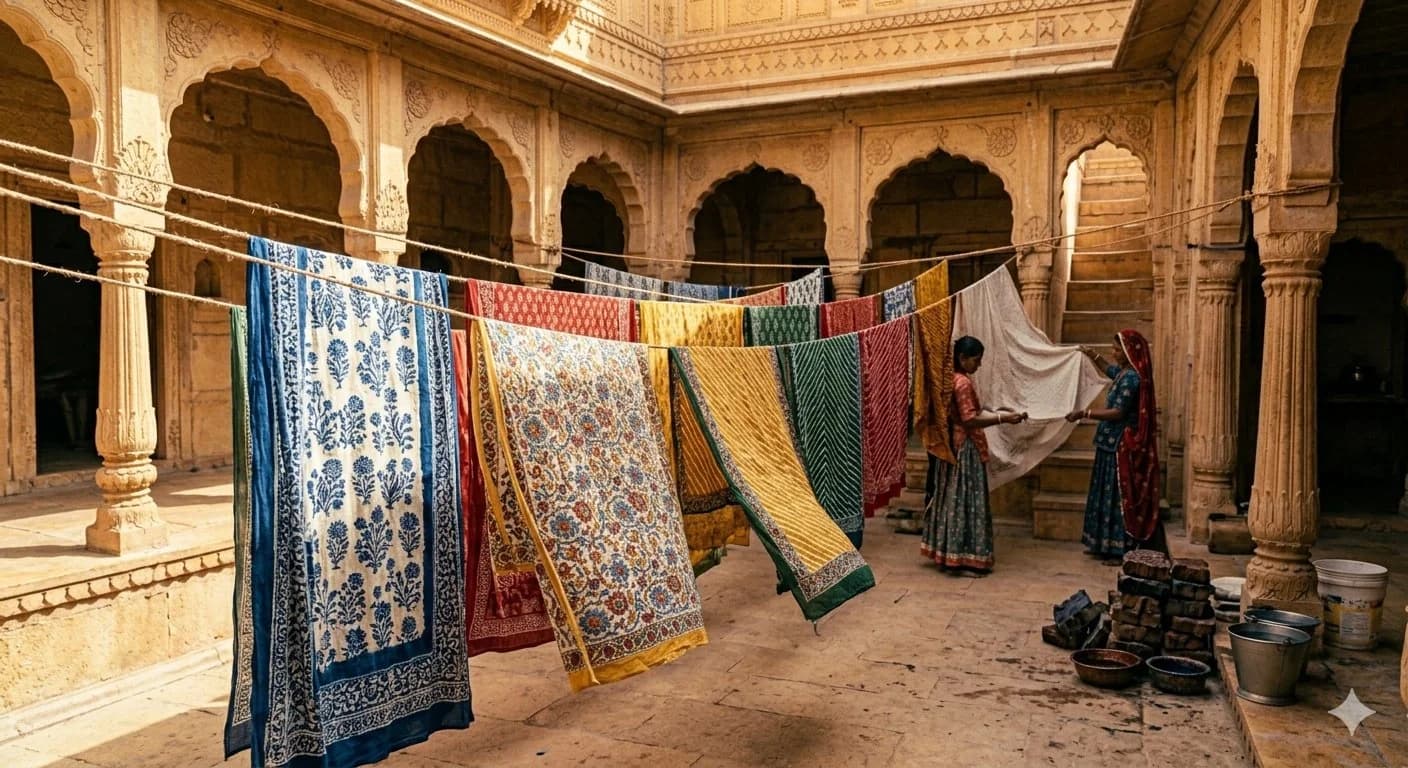
Printed fabric is dried naturally, often in shade or sunlight depending on the dye type used.
Fixing the Colors
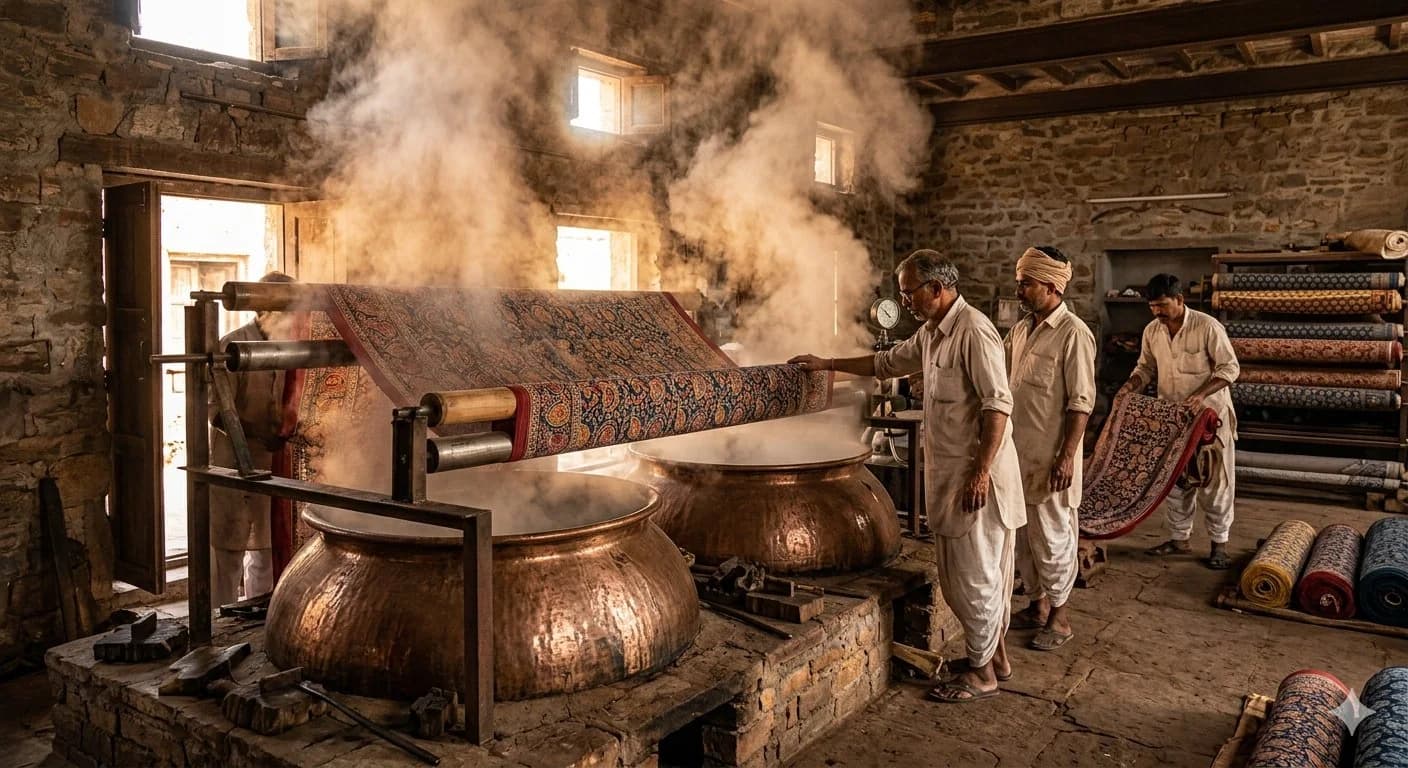
Colors are fixed through steaming, heating, or chemical treatment. Traditional methods may involve washing and sun-curing.
Washing
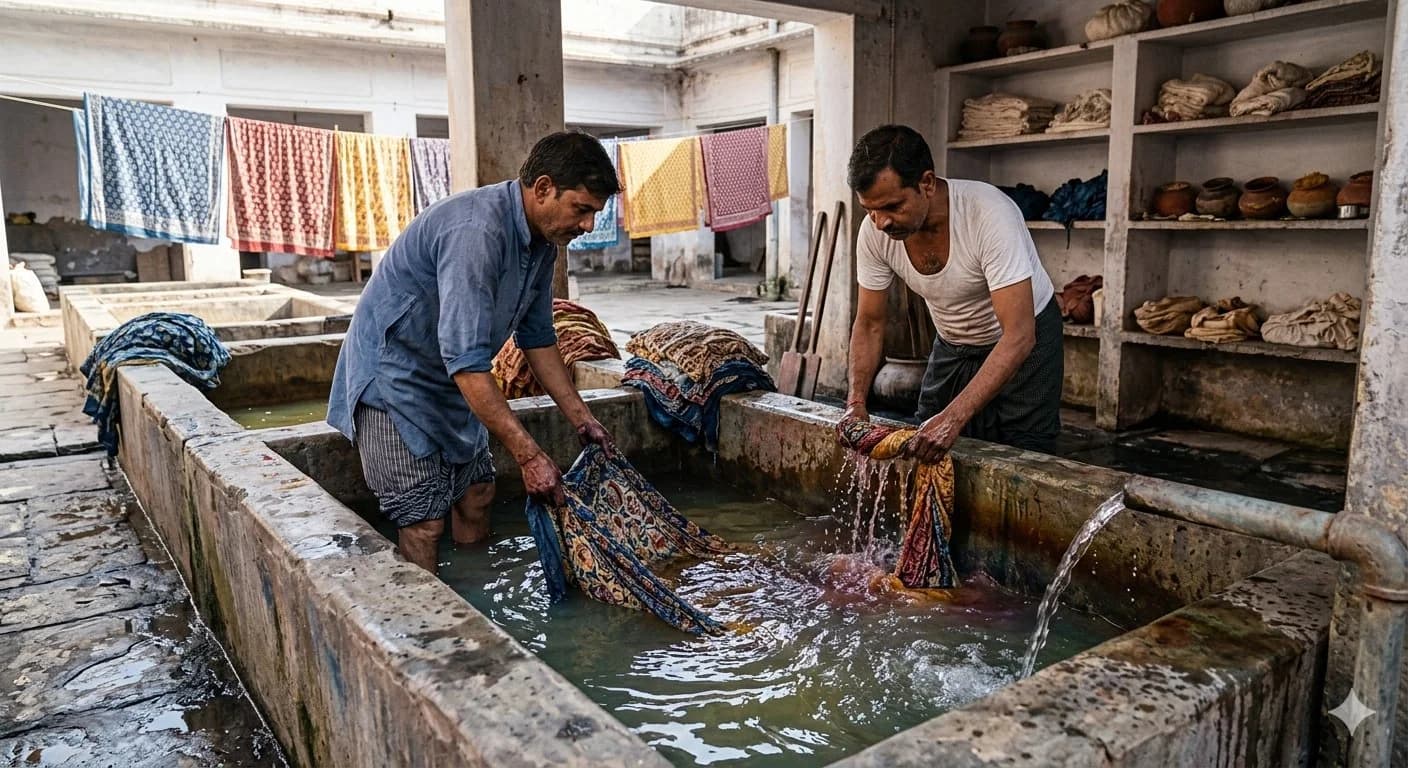
Excess dye and printing paste are removed through multiple washes, enhancing color fastness and fabric softness.
Finishing
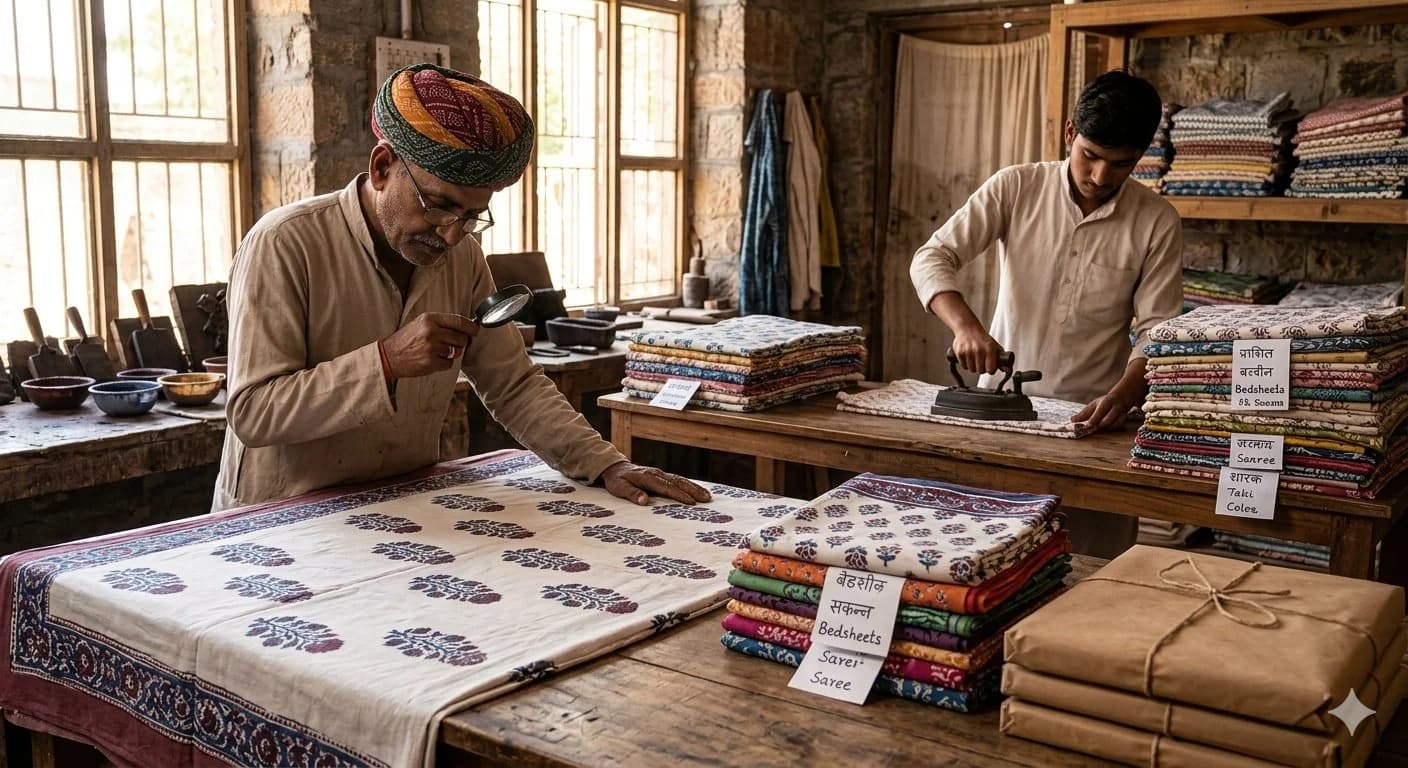
Fabric is ironed or calendered. Quality inspection checks alignment, color consistency, and defects before final packaging.
Traditional Styles
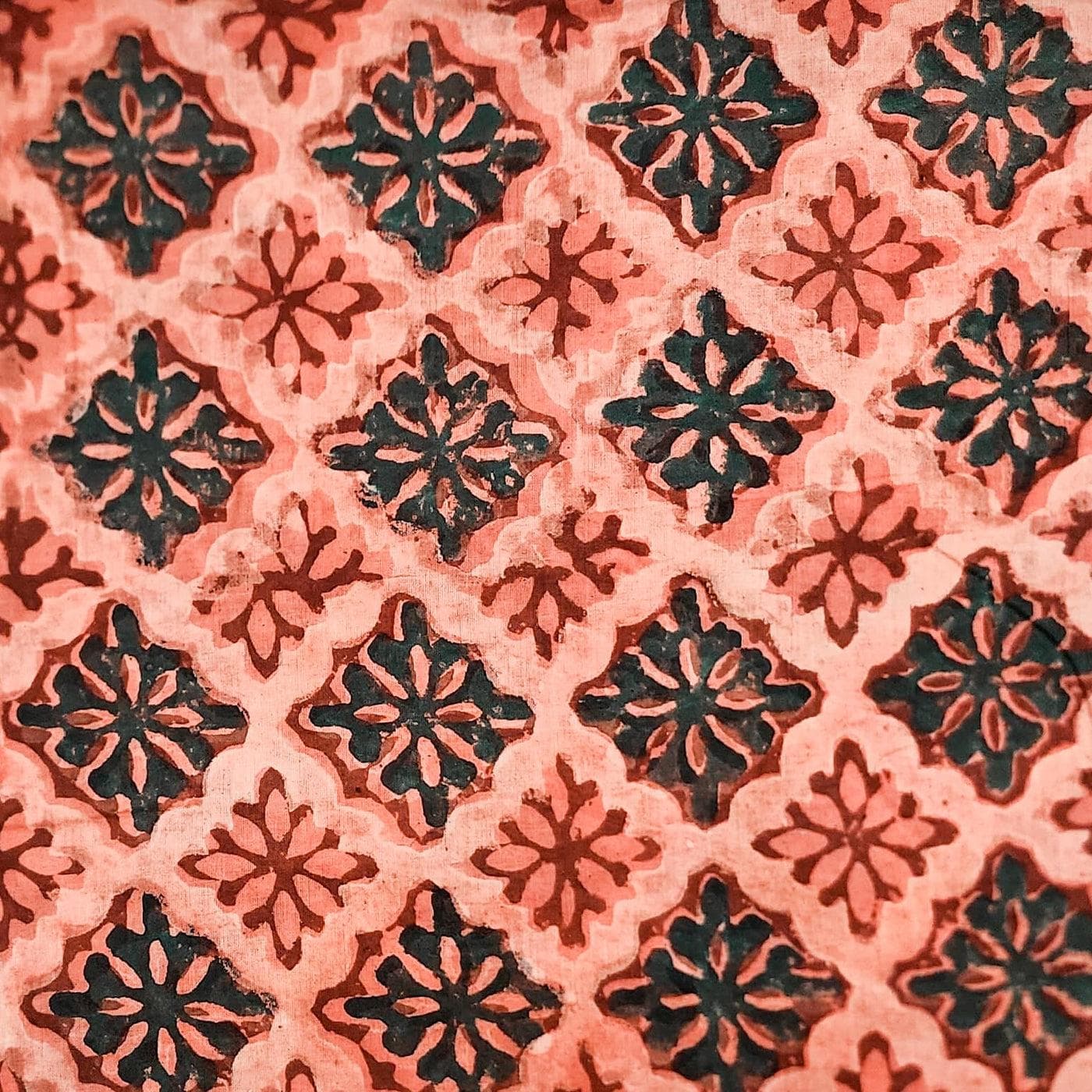
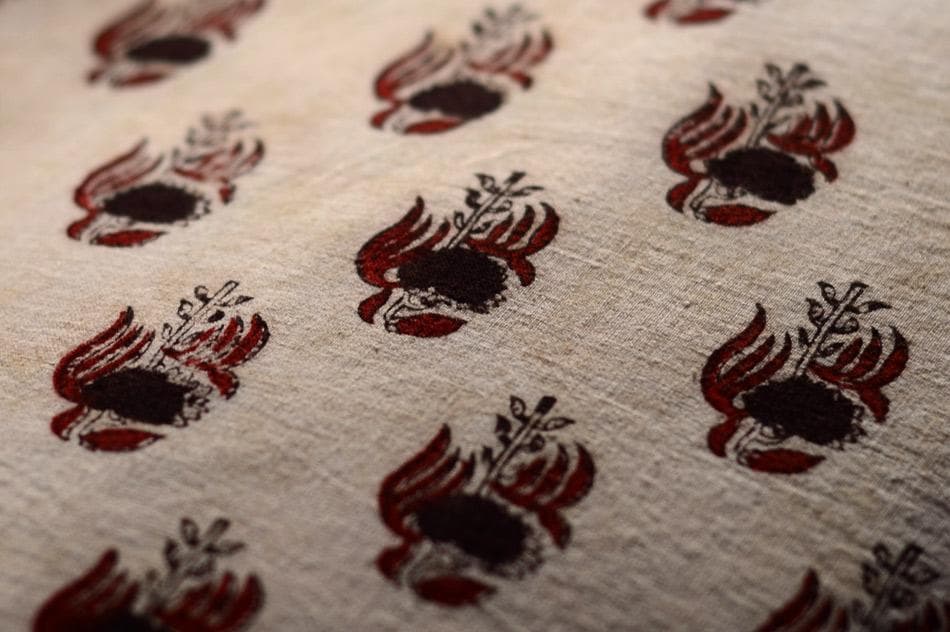
India is home to distinct hand block printing traditions, each with unique motifs and natural dyeing techniques. Some of the most famous include Bagru, Sanganeri, Ajrakh, and Dabu printing.